The CEO of OpenAI, Sam Altman, recently declared a "code red" at his company. This urgent action signals a major push to improve the performance and user experience of their popular chatbot, ChatGPT. The declaration emphasizes the necessity for OpenAI to accelerate improvements to speed, reliability, question answering capability, and personalization—with such severity that development of other products is being paused.
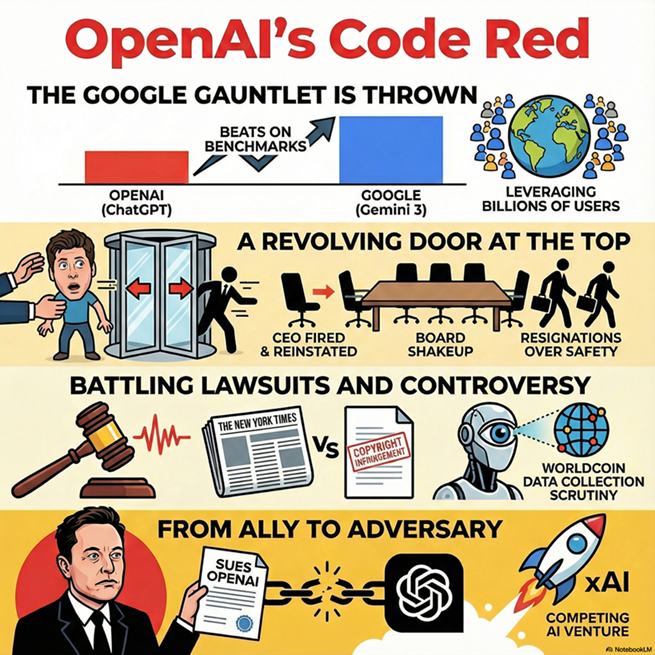
📊 The Numbers Behind the Crisis
The Trigger: Google's Gemini 3 Triumph
The "code red" was reportedly triggered shortly after Google unveiled its powerful Gemini 3 model in November. The shock? Gemini 3 Pro outperformed OpenAI's recently upgraded GPT-5.1 across a range of key AI benchmarks. At 40 years old, Mr. Altman stressed the need for improvement after Google's "sudden leap ahead."
⏱️ Timeline of Crisis: How We Got Here
Google releases Gemini 3 model, surpassing GPT-5.1 on key benchmarks. ChatGPT remains market leader with 800M weekly users.
Sam Altman declares "code red" emergency at OpenAI, pausing development of other products to focus entirely on ChatGPT improvements.
OpenAI undergoes formal restructuring in October, separating non-profit foundation from for-profit operation.
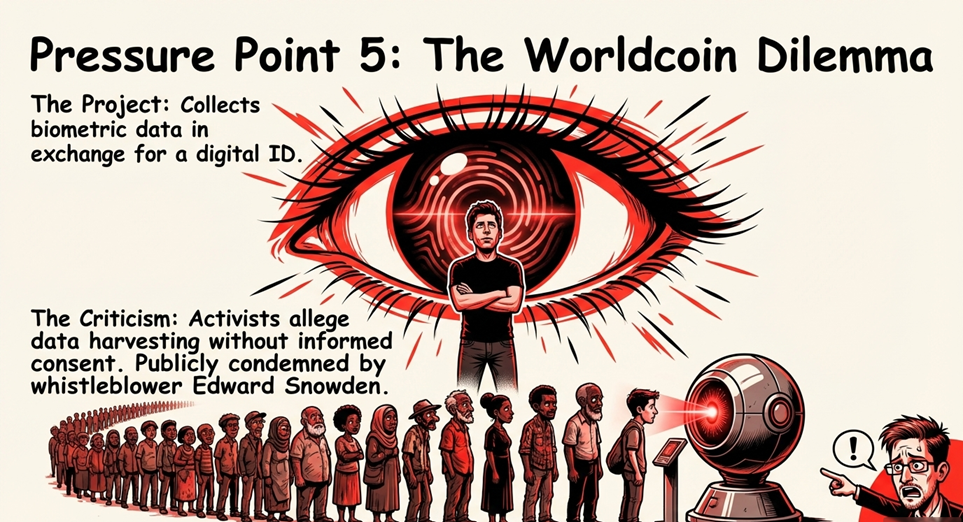
🔴 The 5 Critical Pressure Points
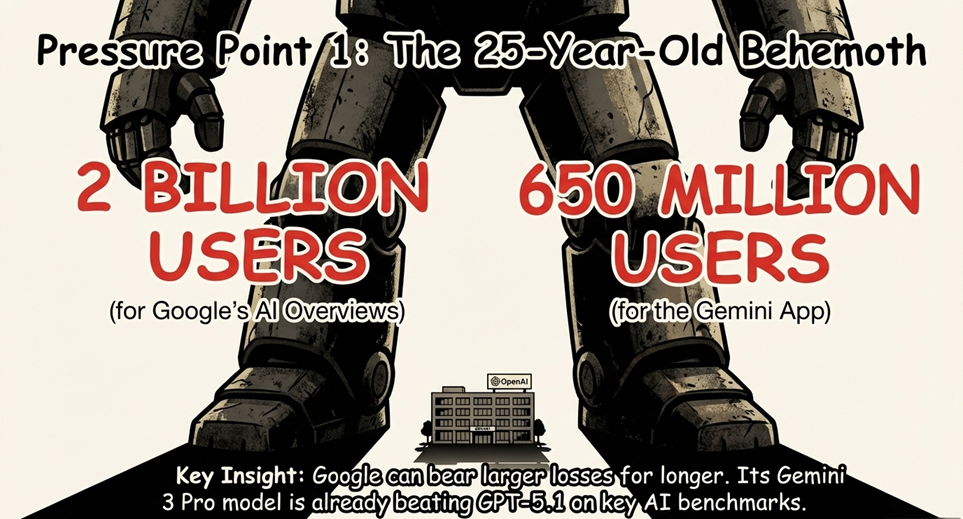
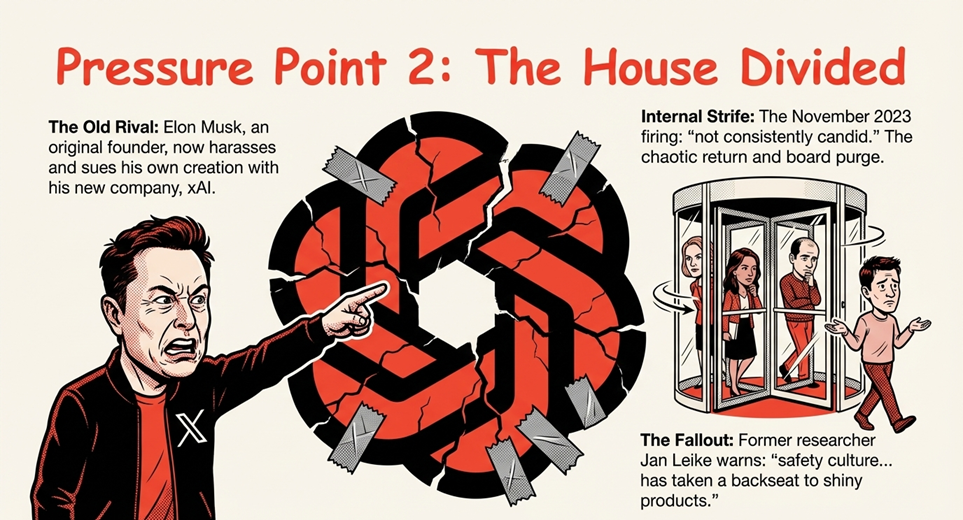
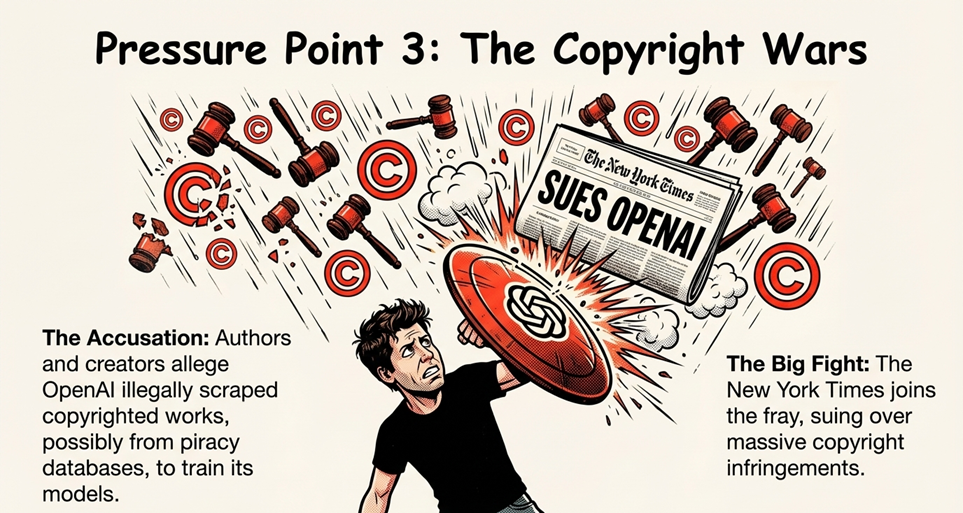
Altman and OpenAI are currently facing intense external competition and internal conflicts, presenting five major challenges that triggered the code red:

📋 OpenAI vs. Google: The Competition Breakdown
| Factor | OpenAI | |
|---|---|---|
| Model Performance | GPT-5.1 (Beaten by Gemini 3) | Gemini 3 (Now Leading Benchmarks) |
| User Base | 800M Weekly (ChatGPT) | 2B Monthly (AI Overviews) + 650M (Gemini) |
| Financial Resilience | Dependent on OpenAI revenue | Can sustain losses long-term |
| Data Infrastructure | Limited internal data sources | Massive search & user data |
| Legal Issues | Copyright suits + serious allegations | Established regulatory relationships |
| Market Position | First-mover advantage eroding | Growing market dominance |
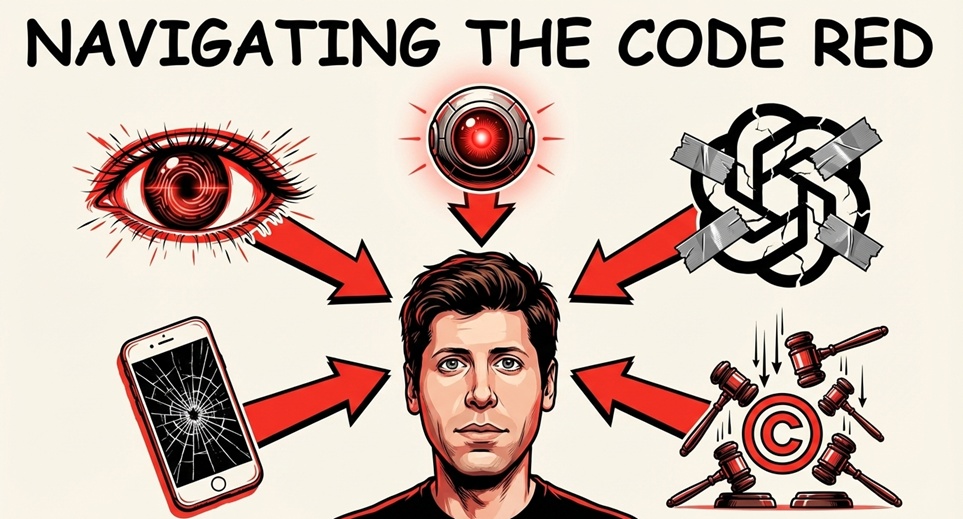
🎯 How OpenAI is Navigating Code Red
To address the immediate competitive pressure from rivals like Google, OpenAI is prioritizing maximizing the performance of ChatGPT. OpenAI has already undergone significant structural and partnership changes in recent years.
Strategic Restructuring
Despite starting as partners with Microsoft, who invested billions in the company, the two companies and their CEOs have gradually become competitors. Microsoft currently holds about 27% of the for-profit section of the organization. OpenAI also formally restructured its non-profit and for-profit entities in October: the original non-profit became the OpenAI Foundation, while the for-profit section is called the OpenAI Group PBC, with the foundation controlling the group and their mission remaining the same.
The Bottom Line
Ultimately, OpenAI, which previously enjoyed first-mover advantages in the AI boom, must now move fast to counter the challenge presented by tech giants like Google. The code red represents a pivotal moment: will OpenAI's agility and focus on product excellence allow them to regain ground, or has Google's fundamental advantages proven too powerful to overcome?
🔮 Conclusion: The High Stakes of Competition
The declaration of "code red" at OpenAI is not just a corporate management decision—it's a testament to the ferocity of the AI race. With Google possessing:
- Massive installed user base (2 billion+ users)
- Superior financial resources to sustain losses
- Proven ability to achieve superior AI benchmarks
- Integrated ecosystem advantages
- Decades of data infrastructure
OpenAI faces an existential competitive challenge. The first-mover advantage in generative AI is no longer sufficient. What matters now is execution, innovation velocity, and the ability to build superior products faster than a competitor with vastly more resources.
The code red is appropriate. The battle for AI dominance has never been more intense, and the stakes have never been higher. For users, developers, and the entire AI ecosystem, this competition will ultimately drive innovation and better products—but for OpenAI, it's become a matter of corporate survival.