Table of Contents
🚨 The Brutal Reality: Privacy is Dead in India
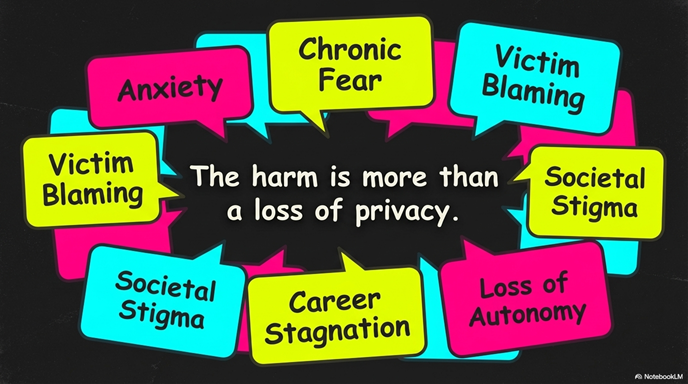
We live in a "fishbowl society" where privacy is not a right—it's a luxury. In the age of Artificial Intelligence, technology has become a double-edged sword, and women are bearing the brunt of this digital transformation.
The Crisis at a Glance:
- 🔴 AI-generated deepfake pornography of women created without consent
- 🔴 Algorithms generating fake sexual images targeting mostly women
- 🔴 Victims blame themselves instead of perpetrators
- 🔴 Laws exist but fail to protect anyone
- 🔴 Conviction rates remain near zero while victimization escalates
Welcome to modern India, where "non-consensual intimate image abuse" (NCII) is the fastest-growing cyber crime, yet the system treats it as a mere inconvenience.
📊 What's Actually Happening: The NCII Epidemic
Non-Consensual Intimate Image Abuse (NCII) refers to the creation, distribution, and possession of intimate images without consent—particularly deepfake pornography generated by artificial intelligence algorithms.
The Numbers Tell the Story:
- 📋 National Crime Records Bureau (NCRB) lumps ALL cybercrimes into ONE category
- ❌ No specific data on deepfake or NCII cases
- ❌ No granular tracking of gender-wise victim distribution
- 🚨 Thousands of cases filed daily across India
- 💔 Conviction rates: Dangerously low and untracked
- 📉 Most victims: Young women (aged 18-35)
Who Are the Victims?
Young women suffer disproportionately from NCII. They experience:
- Psychological trauma: anxiety, chronic fear, depression
- Social stigma: shame, blame, ostracization
- Career destruction: employment loss, professional stagnation
- Self-harm: In extreme cases, survivors have attempted suicide
- Loss of autonomy: Permanent emotional & psychological damage
⚖️ Why Current Laws Are Fundamentally Broken
India has multiple privacy and data protection frameworks:
- ✅ Puttaswamy Judgment (2017): Recognition of Right to Privacy
- ✅ Information Technology Act, 2000
- ✅ Intermediary Guidelines & Digital Media Ethics Code (2021)
- ✅ Digital Personal Data Protection Act (2023)
Yet privacy remains opaque, unprotected, and poorly enforced.
The Core Problems:
Why Laws Fail NCII Victims:
- ❌ Laws are GENERIC — written for general privacy, not technology-specific abuse
- ❌ No clear accountability mechanisms for deepfake generation & dissemination
- ❌ No gender-neutral framework (transgender victims completely overlooked)
- ❌ Deepfake generation is a legal grey area — not clearly criminalized
- ❌ Insufficient penalties for perpetrators relative to harm caused
- ❌ No victim support or compensation mechanisms
The Fundamental Contradiction:
India positions itself as an IT powerhouse with cutting-edge digital infrastructure. Yet our privacy laws are stuck in 2017, written before deepfake technology became mainstream. Technology evolved. Laws stayed frozen.
📋 The SOP That Changed Nothing
On November 11, 2025, the Ministry of Electronics & Information Technology finally issued Standard Operating Procedures (SOPs) to curb NCII circulation.
What the SOP Promises:
Positive Steps:
- ✅ Content must be taken down within 24 hours of reporting
- ✅ Platforms must safeguard "digital dignity" of users
- ✅ Multiple complaint options provided
- ✅ Guidelines mandate that such content be treated as priority
- ✅ Long-awaited recognition of the problem
But Here's the Reality Check:
Why an SOP Alone Isn't Enough:
- 🔴 SOPs are procedural, not legislative — no legal backing for enforcement
- 🔴 Effectiveness depends on platform compliance — which is voluntary, not mandatory
- 🔴 Victim awareness is ZERO — most women don't know this SOP exists
- 🔴 Police lack cyber-investigative capacity to pursue perpetrators
- 🔴 Platform accountability mechanisms are weak — no financial penalties for violation
- 🔴 Victim-blaming culture persists — society blames women, not perpetrators
💔 The Real Victims: Stories Behind the Statistics
Behind every deepfake case is a woman whose dignity has been violated, her autonomy stripped, and her future threatened.
Common Patterns of Abuse:
- Harassment & Intimidation: Deepfakes used as tools of coercion and control
- Revenge Porn: Ex-partners weaponizing intimate images
- Cyberstalking: Targeted campaigns to humiliate and isolate victims
- Professional Sabotage: Deepfakes used to destroy careers and reputations
- Blackmail & Extortion: Criminal gangs using deepfakes as extortion tools
Why Victims Don't Report:
Most NCII victims suffer in silence because:
- 🚫 They blame themselves ("Why did I trust them?", "This is my fault")
- 🚫 They fear police judgment and victim-blaming
- 🚫 They fear social ostracization and permanent loss of reputation
- 🚫 They know conviction rates are near-zero, making reporting futile
- 🚫 They lack digital literacy to understand their rights
- 🚫 They face intersectional discrimination (gender + class + caste)
🚨 Transgender Persons: Completely Forgotten
While the SOP attempts to address NCII, it is completely silent on transgender and non-binary persons—who are disproportionately targeted by deepfake harassment.
The Oversight:
- ⚠️ The Supreme Court recognized transgender persons as the "third gender" entitled to equal rights
- ⚠️ Yet the SOP makes zero mention of transgender victims
- ⚠️ Transgender women are disproportionately targeted by deepfake harassment campaigns
- ⚠️ Existing law provides zero accountability mechanisms for transgender-specific abuse
- ⚠️ This isn't an oversight—it's institutional erasure
🎯 What Needs to Change: A Comprehensive Action Plan
The SOP is a first step, but only a first step. Here's what India actually needs:
1. Dedicated NCII-Specific Legislation
Go beyond SOPs. Enact a dedicated law that:
- ✅ Clearly defines deepfake pornography & NCII
- ✅ Specifies criminal penalties & victim compensation
- ✅ Makes platform liability mandatory, not voluntary
- ✅ Establishes victim support services & rehabilitation
2. Gender-Neutral & Inclusive Framework
- ✅ Protect women, transgender persons, & non-binary individuals equally
- ✅ Acknowledge specific harassment patterns for each demographic
- ✅ Provide targeted support services
3. Police Capacity Building
- ✅ Train officers on cyber-NCII investigations
- ✅ Establish dedicated cyber-NCII units in every district
- ✅ Implement victim-centric investigation protocols
- ✅ Track & report NCII cases separately from general cybercrimes
4. Platform Accountability & Transparency
- ✅ Real-time deepfake detection technology
- ✅ Transparent content removal timelines (24 hours mandatory)
- ✅ Financial penalties for non-compliance
- ✅ Regular algorithm audits for bias & exploitation
5. Victim Support & Rehabilitation
- ✅ Free trauma counseling & mental health support
- ✅ Free legal aid for NCII cases
- ✅ Anonymous reporting mechanisms
- ✅ Victim compensation funds
- ✅ Digital literacy programs for awareness
6. AI-Specific Safeguards
- ✅ Regulate deepfake generation tools
- ✅ Require explicit consent for intimate image usage in AI training
- ✅ Watermark detection systems for sensitive images
- ✅ Clear platform liability for AI-generated NCII content
🔚 Conclusion: Privacy is a Human Right, Not a Luxury
India isn't alone in facing the deepfake crisis. But India's response is weakest among democracies. While other countries are passing comprehensive NCII-specific legislation, India is still issuing voluntary SOPs.
The Bottom Line:
- ✅ The SOP is a step forward—acknowledge it
- ⚠️ But it's only a FIRST step—not a solution
- 🚨 Much more legislative work is needed
- 💪 Victims deserve JUSTICE, not just procedures
- 🎯 Women's dignity is not negotiable
We live in a fishbowl where privacy is increasingly illusory. But privacy is not a luxury—it's a fundamental human right. India must move beyond SOPs and SOPs and enact comprehensive, victim-centric, gender-neutral legislation that holds perpetrators accountable and supports survivors.
Until then, deepfake victims will keep suffering in silence, and the system will keep failing them. 💔